The Ribeirão Bonito
“Escola Coronel”
Our “Escola Coronel” was the city’s first “grupo escolar”. Founded on October 12, 1909 to fulfill objectives of the First Republic Period, which proposed major changes to educational organization and teaching practices (ALVES; SOUZA, 2021, p. 33). The land for its construction was donated partly by Ribeirão Bonito and by Senator João Batista de Mello Peixoto. The design was created by a r q u i t e c t Manuel Sabater and t he building was registered as a site of historical significance by CONDEPHAAT – Conselho de Defesa do Patrimônio Histórico, Arqueológico e Turístico do Estado de São Paulo in July 21, 2010 (Diário Oficial de 11 de novembro de 2010, pgs 112 a 114).
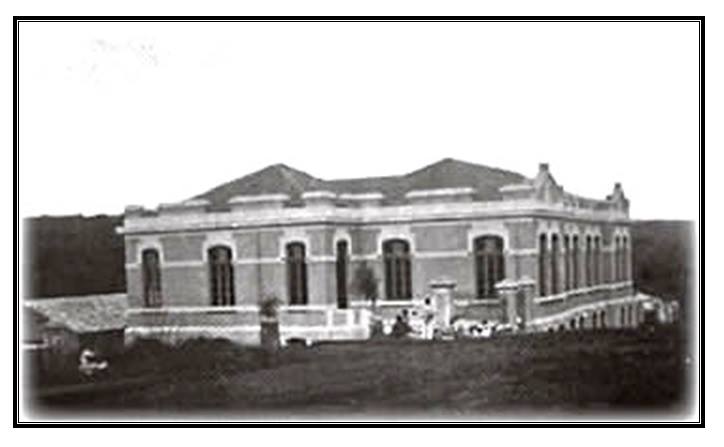
General Context
Brazil became a republic in 1889 and from the 1890’s to the early 20’s the new leaders of the Republic had some specific ideas to develop Brazilian society. Primary education was to be mandatory, univeral and free. Driven by the progress of the coffee industry and railroads, the Government of the state of São Paulo built over 123 public schools. The new school standard, popularly named “Grupo Escolar”, represented modernity and rationality; aligned with the ideals of progress, civility and patriotism of the new regime” (ALVES; SOUZA,2021, p.34) which aimed to eliminate illiteracy within the population and create informed citizens throughout the state. (BADUY; RIBEIRO, 2020).
During this period, the use of standard designs predominated. The adoption of this practice allowed each new school to be repeated and adapted to the different needs of size and physical constraints, such as the topography of their cities. The designer had freedom to compose the facades as a way of giving identity to the building , using decorative elements of the time, making each building unique. In terms of design the schools had classrooms for boys and girls, teachers’ room and space for a principal’s office. Restrooms and sports facilities were built outside of the core building. In terms of construction, a high basement allowing for natural ventilation was used as a way of adapting to the different topographies, and the symmetrical approach ensured spatial clarity (ARQUITETURA ESCOLAR PAULISTA, 1998 E VICENTE; FATTORE, 2010).

+55 (16) 99753-7252
contato@restaurocoronel.com.br
